Remote Towers are already in operation and Remote Tower Centers (RTCs) are increasingly becoming available worldwide. Air Traffic Control and Aerodrome Flight Information officers (ATCOs/AFISOs) are no longer tied to the location of the airport for which they provide ATC services. Furthermore, airports can now be grouped together in RTCs, creating even more opportunities to increase flexibility, safety and the service level for airspace users.
Transforming Conventional Towers into Virtual Towers
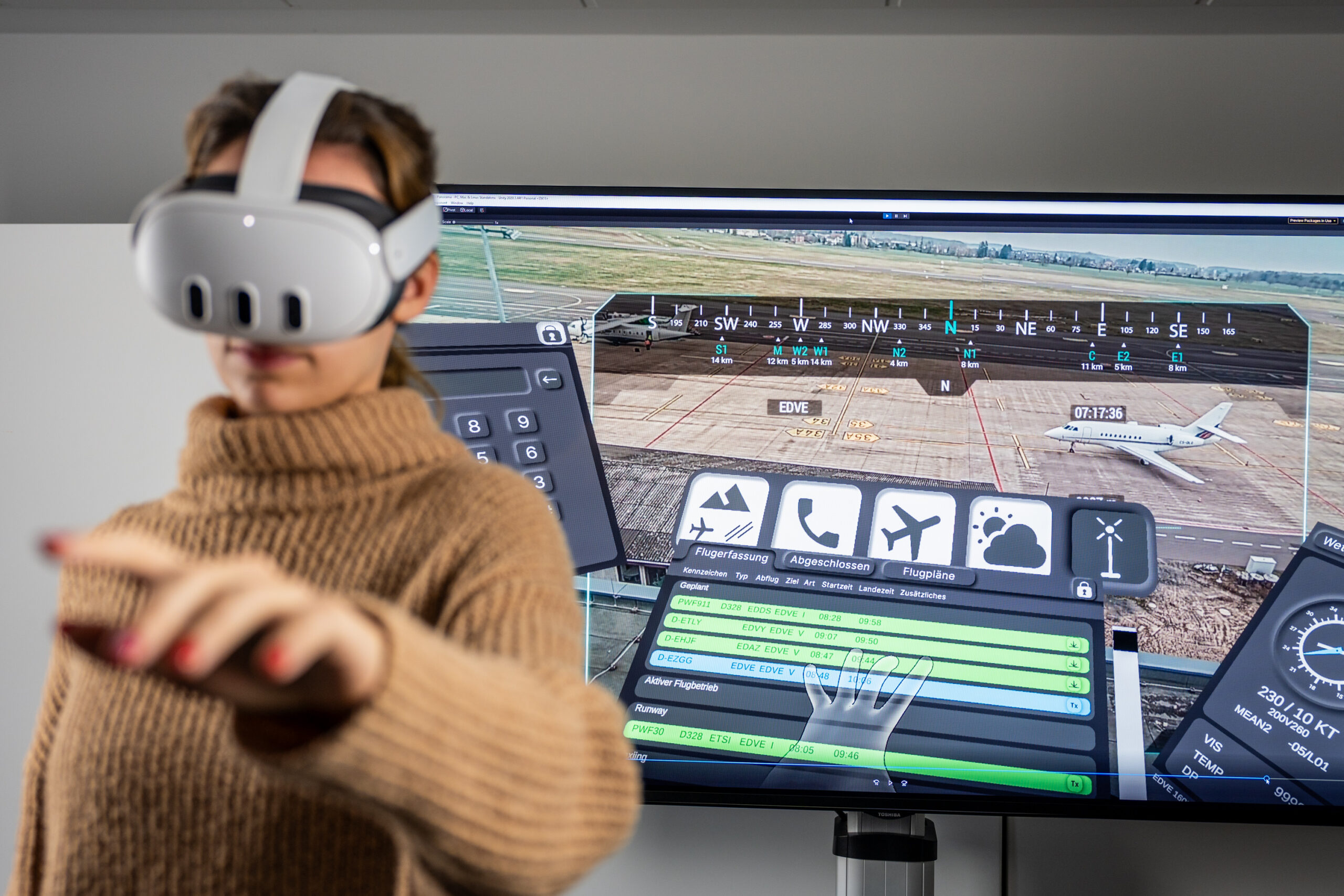
But what if we went one step further? What if the entire Controller Working Position (CWP), including the view out of the Tower window and all needed systems and interactions were deployed in a virtual environment? Not in stationary rooms with displays and computers, but wirelessly, anywhere, using standard and affordable Virtual Reality (VR) glasses? You wouldn’t even be restricted to a specific RTC. ATCOs and AFISOs would be able to provide air traffic services from anywhere, even from home, with nothing more than VR glasses and an internet connection.
Costly on‑site controller workstations, dedicated buildings and related infrastructure, and associated maintenance expenses would be eliminated. This significantly reduces capital and operating expenditures, making advanced air traffic services economically viable even for the smallest airports.
Furthermore, the fully virtual, software‑based architecture enables rapid standardization and seamless adaptation of user interfaces across multiple units and airports. Configurations can be replicated, modified, and deployed quickly without the need to replace or upgrade costly hardware, ensuring both operational consistency and maximum flexibility.
Thus, by lowering the cost-based entry barrier, remote tower technology can now become a strategic enabler for small and regional airports. It allows them to collaborate and generate inter‑airport synergies by pooling high‑quality Air Traffic Services (ATS) that would otherwise be financially out of reach on an individual basis.
Through shared ATS personnel and scalable service provision, airports can align service levels with actual demand. This enables extended operating hours and flexible handling of Prior Permission Requests (PPRs), such as night‑time IFR operations or short‑notice medical flights, without permanently fixed staffing costs.
Overall, virtual remote tower concepts transform ATS from a fixed, infrastructure‑bound, costly and inflexible ATS unit into a flexible, demand‑driven service model — enhancing operational resilience, economic sustainability, and regional connectivity.
With these benefits, Virtual Tower can reduce costs, increase the level of service, boost revenue, and enable your small airport to become sustainable and financially self-sufficient.
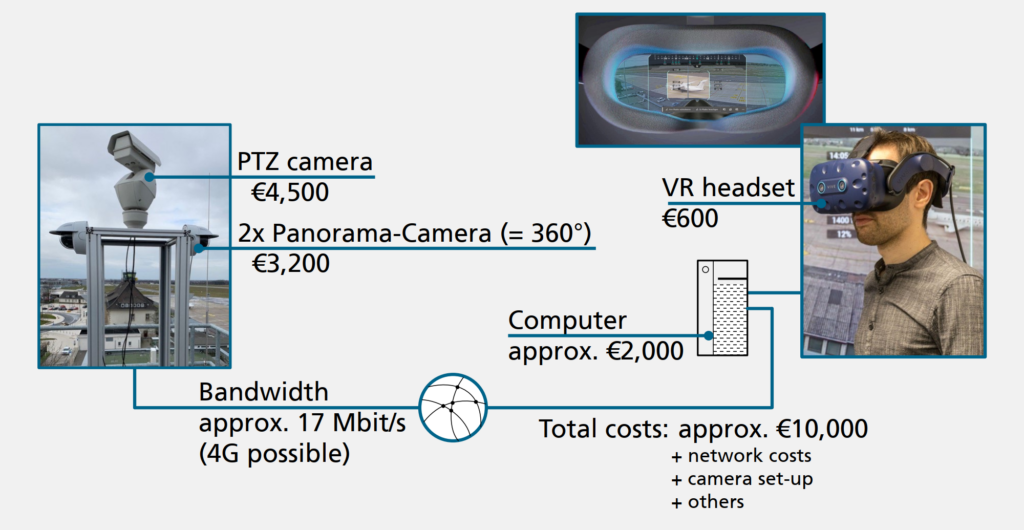
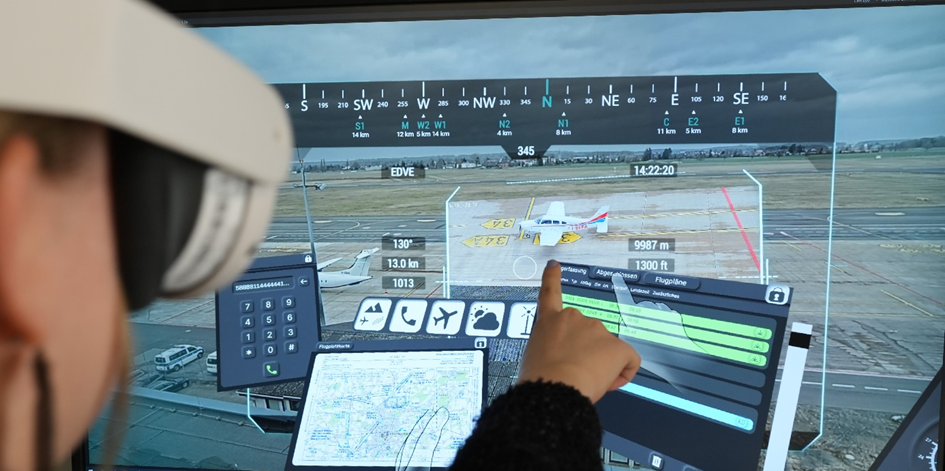
Furthermore, the hardware and infrastructure requirements of Virtual Tower are extremely low, and this system is highly scalable. This system consists of a 360° panoramic live video feed using low-cost cameras, a state-of-the-art pan-tilt-zoom (PTZ) camera, a computer for video processing, and a VR headset. The full environment is shown through the headset, including the panorama, PTZ feed, ambient airport noise, virtual panels for radio communication, flight tracking, weather, and more.
This brings the hardware costs to less than 15.000€. The low bandwidth requirements also make this system usable even with mobile phone networks or satellite.
Lastly, because of the virtual nature of this system, it is extremely scalable. Multiple ATS providers and other airport personnel can use one camera setup simultaneously.
How far have we come? Will ATC move in this direction? Check out DLR’s prototype and let us know what you think!