
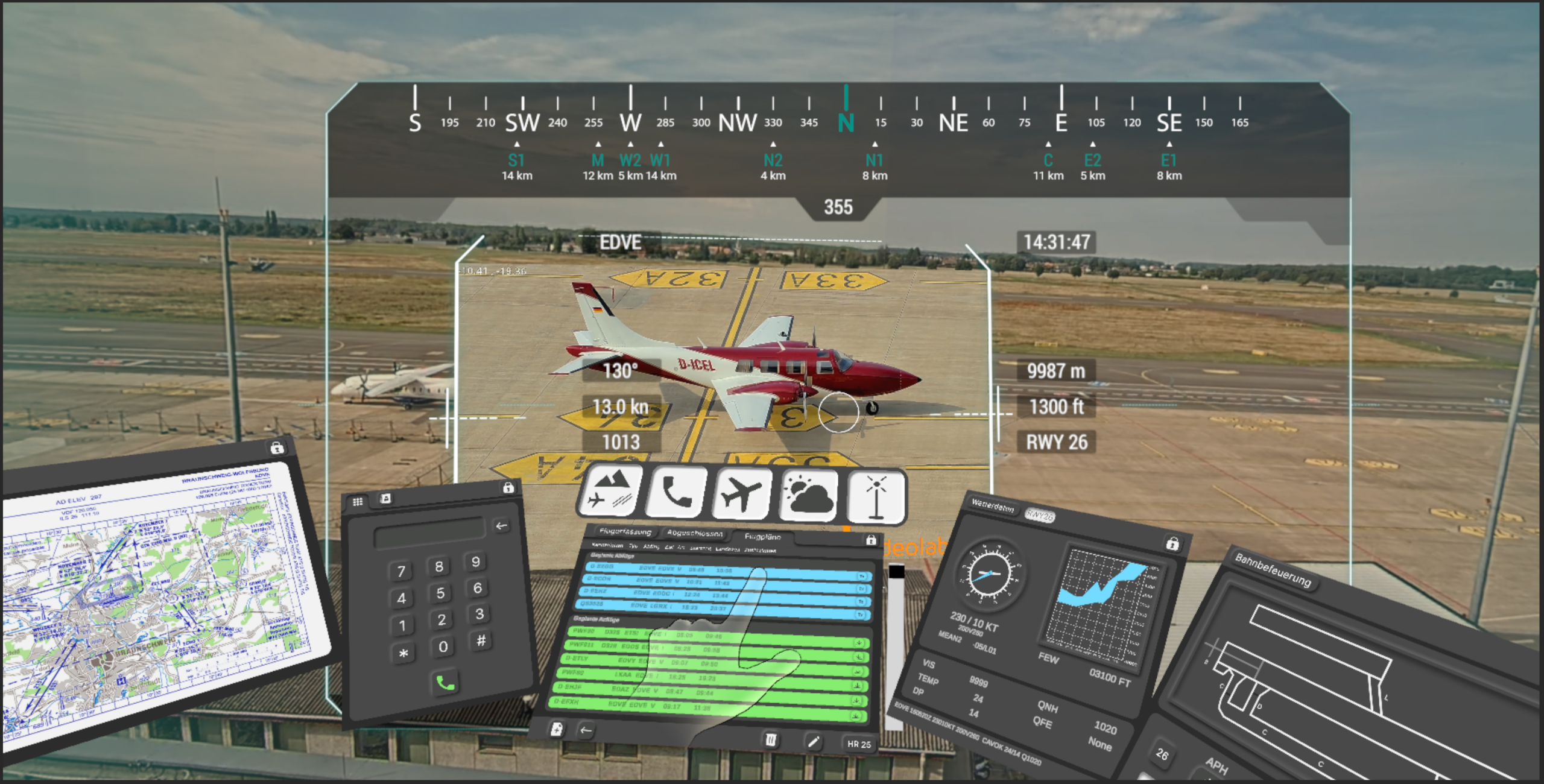
The Virtual Tower enables a wide range of applications that enhance the cost efficiency, flexibility, and overall capability of airport Air Traffic Services (ATS). The following use cases illustrate how these benefits can be realized in practical operations.
Cost-Effective Multiple Remote ATS for Small Airports
The Virtual Tower allows several small airports to be managed from a single remote location, especially during periods of low traffic. By sharing operators across multiple aerodromes, airports can extend operating hours without increasing staffing costs.
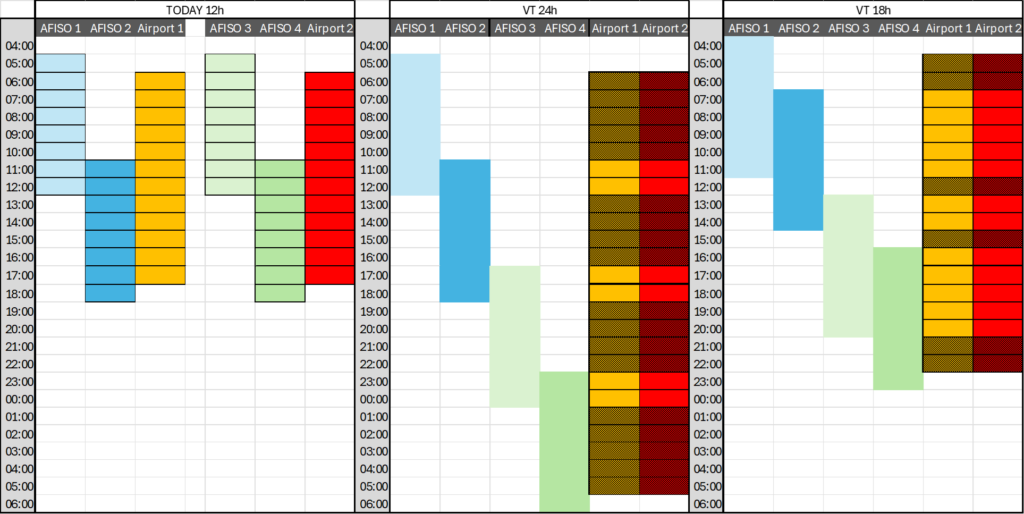
For example, two airports that traditionally operate 12 hours per day with two AFISOs each could extend their service to 18 or even 24 hours. Through coordinated scheduling and traffic-aware workload management, one or two operators can oversee both airports simultaneously during off-peak times, while still ensuring sufficient staffing during peak periods.
Flexible Prior Permission Requests During Off-Shift Times
Handling Prior Permission Requests (PPR) outside regular tower operating hours typically requires on-site staffing, even when traffic demand is minimal. The Virtual Tower enables these requests to be handled remotely, eliminating the need for physical presence at the airport.
Operators can provide ATS services from a Remote Tower Center (RTC) or another remote location, activating services only when required. This allows airports to offer greater flexibility to users while minimizing idle staffing time.
ATC or AFIS on Demand
Airports often face the challenge of needing higher service levels (e.g., ATC instead of AFIS) only at specific times. Permanently maintaining such capabilities can be costly and inefficient.
With the Virtual Tower, qualified personnel can connect remotely and temporarily provide enhanced ATS services for specific flights or situations. Once the operation is complete, the system reverts to its standard service level. This “on-demand” approach ensures regulatory compliance and operational safety without unnecessary costs.
Increased Versatility for Training and Contingency Operations
Beyond daily operations, the Virtual Tower offers a highly adaptable platform for training, simulation, and contingency scenarios. Remote environments can be configured to replicate various airport conditions, enabling efficient and cost-effective training of personnel.
Additionally, in case of local tower outages or emergencies, the Virtual Tower can serve as a backup solution, ensuring continuity of ATS with minimal disruption.
Improved Emergency Responsiveness
In emergency situations, the Virtual Tower allows additional ATS support to be deployed instantly from remote locations. This rapid scalability ensures that unexpected events can be handled with the appropriate level of staffing and expertise without delay.
Enhanced Situational Awareness for Stakeholders
The Virtual Tower improves situational awareness not only for air traffic controllers but also for other stakeholders such as fire brigades, search and rescue (SAR) teams, and ground operations.
High-resolution camera systems, augmented labels, and flexible viewing angles provide a comprehensive overview of the airport environment. This enables faster decision-making, better coordination, and safer handling of both routine and emergency situations.
Automatic Detection and Tracking
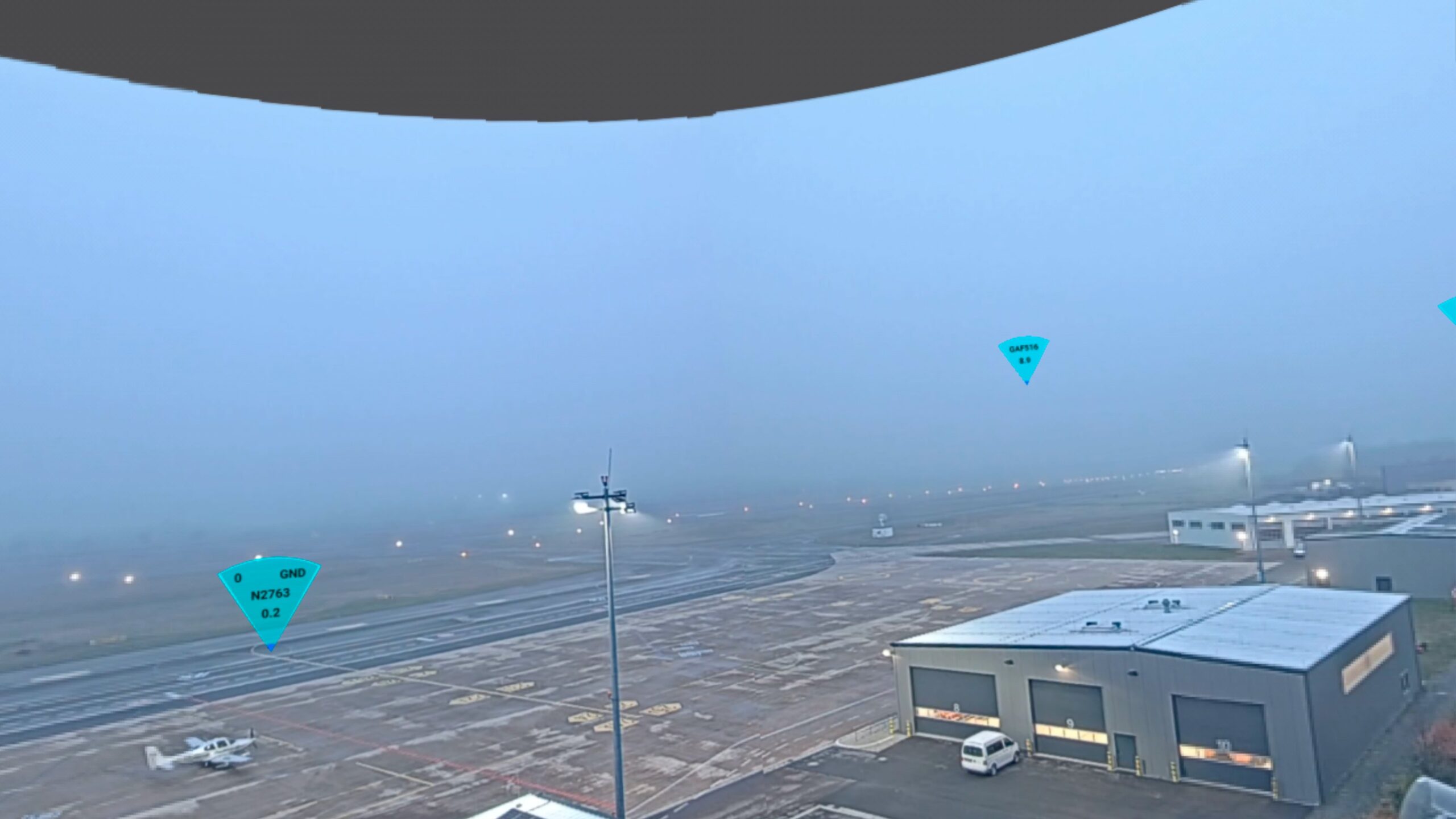
Advanced sensor integration within the Virtual Tower enables automatic detection and tracking of objects such as drones or other potential security threats. These systems enhance safety by providing early warnings and continuous visual tracking, allowing operators to respond quickly and effectively to emerging risks.